Iceland guide
Natural Hot Springs in Iceland
Beyond the polished lagoons, Iceland is dotted with natural hot springs — geothermal pools and warm rivers set in the open landscape, many of them free to bathe in. They trade comfort for a wilder, more memorable soak, and several are reached on foot or by 4×4. Here’s what to know.
What is a natural hot spring?
A natural hot spring is a geothermally heated pool or river in nature, either undeveloped or only lightly built up. Most are free, with basic facilities or none at all, and some take a hike to reach. The reward is a soak in raw Icelandic scenery, far from the crowds of the premium spas.
Iceland’s best-known natural hot springs
- Reykjadalur — the “hot spring river” near Hveragerði, reached on a scenic uphill hike, where a warm river is yours to bathe in. Often done as a guided hike.
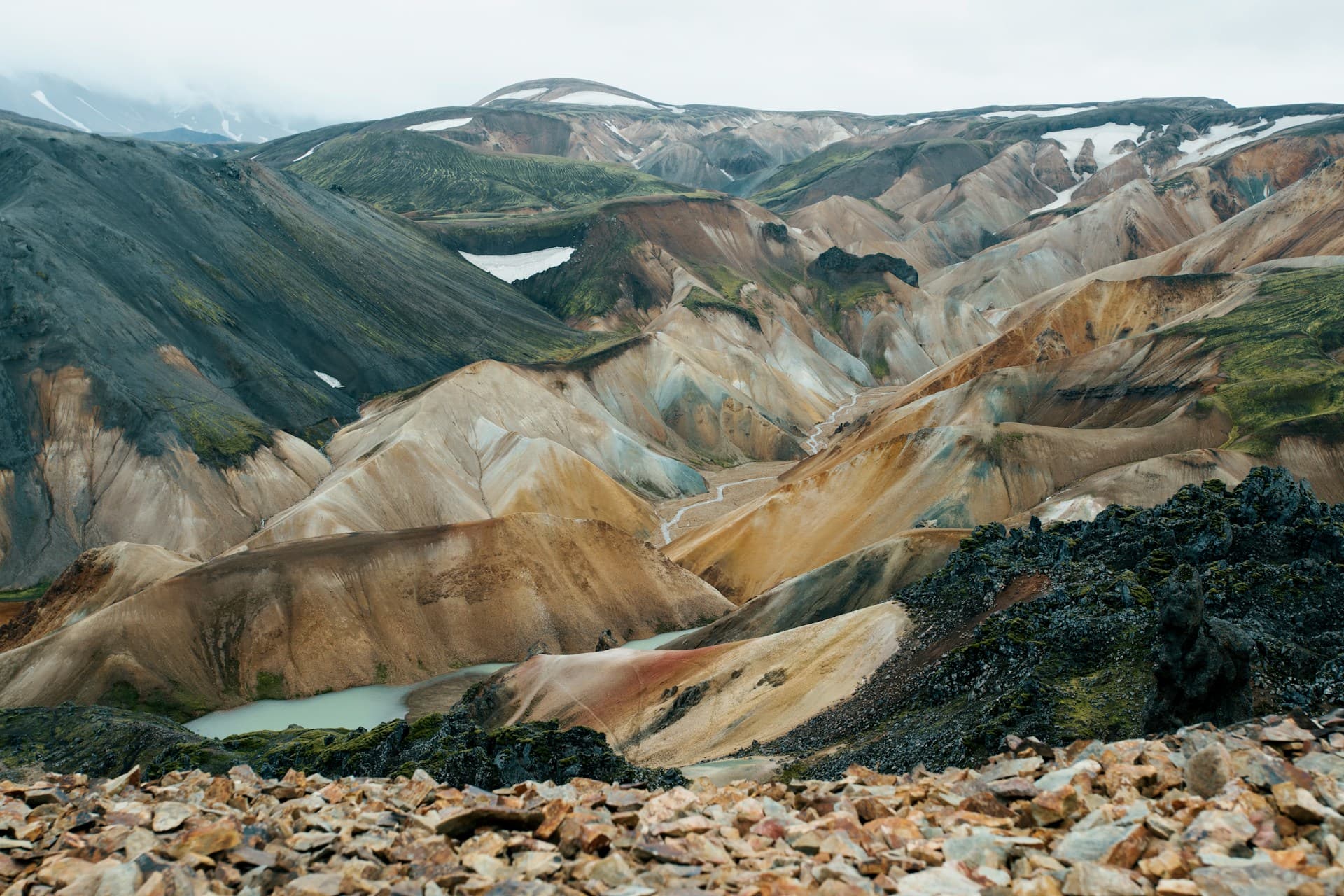
- Landmannalaugar — natural pools amid the rhyolite mountains of the Highlands. A summer-only destination, usually reached on a guided Highlands tour or by 4×4.
- Hvammsvík — sea-edge pools in a quiet fjord near Reykjavík; lightly developed, bridging the wild and the spa.
- Smaller pools and old swimming holes scattered around the country, often free and undeveloped.
How to reach them
Some natural springs sit just off the road, but many need effort: a hike (Reykjadalur), or a 4×4 over rough tracks. The Highlands springs are reachable only in the warmer months when the mountain roads open, and are most easily visited on a guided super jeep or multi-day tour that handles the terrain.
A safety note worth reading
Not all geothermal water is safe to enter. Some springs and pools are scalding — even boiling — and can cause severe burns. A few rules keep a wild soak safe:
- Never enter water you haven’t confirmed is a safe temperature. Bathe only in pools known and used for bathing.
- Look but don’t touch at geothermal features that aren’t bathing spots (some famous-looking pools are far too hot).
- Respect private land and any posted signs, and leave no trace — these places stay special because visitors care for them.
Going with a guide takes the guesswork out: they know which pools are safe and how to reach them.
Natural springs or a developed lagoon?
- Want raw, scenic, and often free? A natural hot spring.
- Want comfort, facilities, and an easy visit? A developed lagoon like the Blue Lagoon or Sky Lagoon — compared in Blue Lagoon vs Sky Lagoon.
Frequently asked questions
Are natural hot springs in Iceland free? Many are — wild pools like the Reykjadalur river cost nothing to bathe in. The trade-off is basic or no facilities, and some require a hike or 4×4 to reach. Lightly developed spots may charge a small fee.
Can you bathe in any hot spring in Iceland? No — never. Some geothermal water is scalding or boiling and can cause serious burns. Only bathe in pools known and used for bathing, and never enter water you haven’t confirmed is safe. A guide removes the guesswork.
What is the best natural hot spring in Iceland? Reykjadalur is the most popular and accessible, thanks to its hot-spring river and scenic hike. Landmannalaugar is the most spectacular, but it’s a summer-only Highlands destination.
Find guided hot-spring hikes and natural-pool trips on our hot springs & lagoons tours page, or start with the overview of Iceland’s hot springs & lagoons.